

Last Updated: November 4, 2026
Quick Summary
To brush a double-coated dog at home, use line brushing: part the fur to the skin in thin sections and brush each layer with light, short strokes, then comb each section to confirm you reached the skin. Use at least two tools, a slicker brush plus an undercoat rake or metal comb, and brush two to three times a week, daily during seasonal shedding.
- Gather a slicker brush with long pins, a metal comb, an undercoat rake or shedding comb, and treats.
- Brush before bathing, since wet fur tightens tangles.
- Double coats need two tools minimum: one to loosen hair, one to check the skin.
- Leave the face and belly for last when line brushing.
- Stop if you find painful matting or red, irritated skin and let a professional groomer remove it.
Table of Contents
- What You Need Before You Start Brushing a Double-Coated Dog
- The Best Brush for Double-Coated Dogs and How to Choose It
- Line Brushing a Double-Coated Dog, Step by Step
- Frequently Asked Questions
What You Need Before You Start Brushing a Double-Coated Dog
Brushing a double-coated dog at home starts with the right tools, a calm space, and patience. The soft undercoat traps warmth and sheds heavily, while the topcoat of guard hairs protects the skin; dead hair stays trapped until you pull it out.
Skip it, and the coat mats against the skin.
Gather a slicker brush with long pins, a metal comb, an undercoat rake or shedding comb, and treats.
Set everything on a non-slip mat in a quiet room. Brush before bathing, since wet fur tightens tangles. For broader guidance, see our guide on pet grooming for healthier, happier dogs and cats.
Brushing a dry coat with too much force irritates skin. Use light pressure and let the tool do the work.
The Best Brush for Double-Coated Dogs and How to Choose It
The best brush for double-coated dogs depends on coat length and density, not breed alone. Short, dense coats do well with a slicker and undercoat rake; longer coats need a slicker plus a comb-through.
Slicker brush: long pins lift loose hair. Metal comb: checks you reached the skin. Undercoat rake: pulls dead undercoat from dense coats. Anti-tangle comb: works through knots without tearing.
Our self cleaning slicker brush for dogs and cats removes dead undercoat and loose hair. Pair it with our bamboo anti-tangle comb or a regular comb for dogs and cats.
Self Cleaning Slicker Brush for Dogs and Cats →


A common mistake is buying one brush and stopping there. Double coats need two tools minimum: one to loosen hair, one to check the skin.
Line Brushing a Double-Coated Dog, Step by Step
Line brushing a double-coated dog means working in thin sections, parting the fur to the skin and brushing each layer. It is the only reliable way to reach the undercoat rather than skimming the surface.
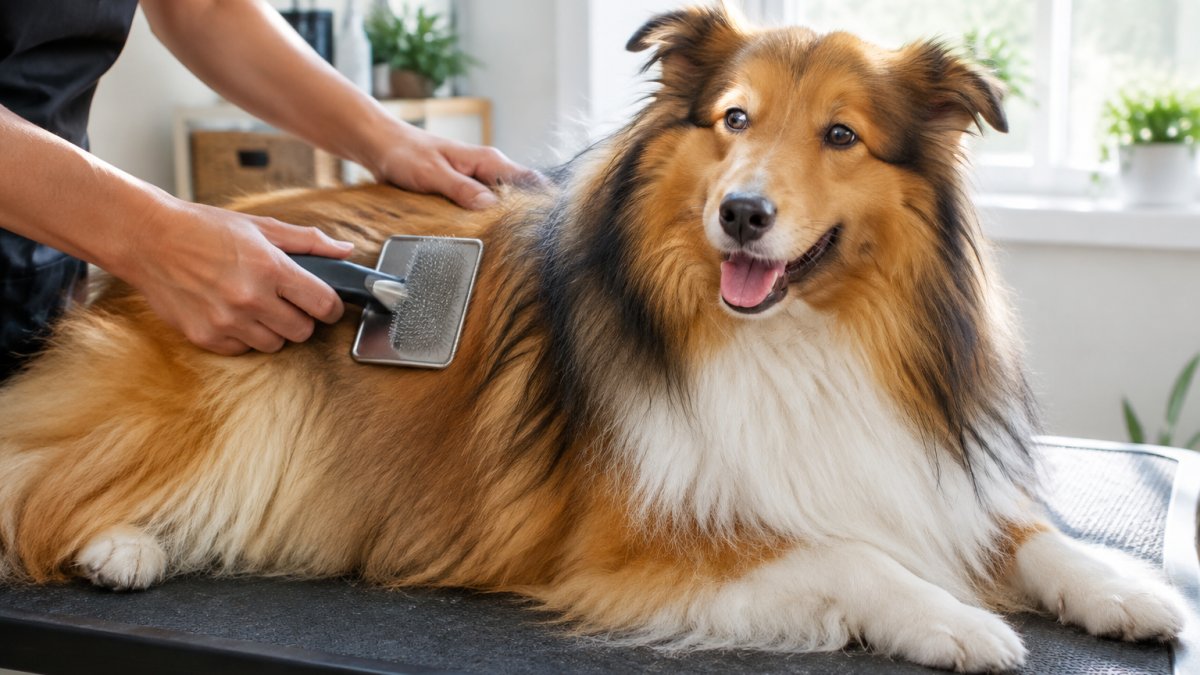
Part the fur against the grain to expose skin, brush that line with light short strokes moving outward, work section by section, comb each finished section to confirm you reached the skin, and leave the face and belly for last.
How often to brush a double-coated dog depends on the season: two to three sessions a week normally, daily during seasonal shedding.
Stop if you find painful matting or red, irritated skin, tight mats pull at the skin and should not be forced; a professional groomer can remove them safely. If your dog flinches or guards an area, pause.
A practical schedule keeps coat maintenance simple:
| Coat Condition | Brushing Frequency | Main Tool |
|---|---|---|
| Normal, low shedding | 2-3 times weekly | Slicker brush |
| Seasonal shedding | Daily | Undercoat rake + slicker |
| Long or dense coat | Every other day | Slicker + metal comb |
| Tangles starting | Daily until clear | Anti-tangle comb |
Frequently Asked Questions
How often should you brush a double-coated dog?
Brush two to three times a week as a baseline, and daily during seasonal shedding when loose undercoat comes out fast. Short-coated double-coated breeds can stretch to twice weekly, while long or dense coats need more frequent sessions. Check the coat with a metal comb each time: if it snags, brush more often. Regular weekly brushing removes dead hair before it mats.
What is the best brush for double-coated dogs?
You need two tools, not one. A slicker brush with long pins lifts loose hair from the topcoat, and a metal comb checks whether you reached the skin. For heavy shedding, an undercoat rake removes dead undercoat without cutting the guard hairs. Paw Atelier stocks a self-cleaning slicker brush (AED 43.00) and a regular comb (AED 35.00) that cover both jobs. Skip tools that cut into the coat, since they damage the topcoat's protective layer.
Should you brush a double-coated dog before or after a bath?
Brush before bathing. Water tightens tangles and mats into felt, so a coat that goes into the bath already matted becomes much harder to fix. Run a comb through the full coat first, then bathe, then brush again once the coat is completely dry to catch loosened undercoat. Avoid brushing a wet double coat, because the hair can stretch and break.
Brushing a double-coated dog at home takes the right tools and a steady routine, and some coats need more than a home session can give. At Paw Atelier in Al Hamidiya, Ajman, we offer pampering grooming sessions alongside our grooming tools, with easy booking through WhatsApp. Pick up a slicker brush or comb from our shop, or book a grooming session and let our team handle the undercoat for you.
