

Last Updated: November 18, 2026
Quick Summary
A secure cat carrier is the most important piece of equipment for a grooming appointment, keeping your cat safe in transit and protecting groomers from scratches. Choose a hard-sided, top-loading model that is escape-proof, easy to clean, and sized so your cat can stand and turn around. Start carrier training at least a week before the appointment using treats and positive reinforcement.
- Salons ask for a hard-sided or structured carrier that opens from the top or front.
- Start carrier training at least a week before the appointment, using repetition and positive reinforcement.
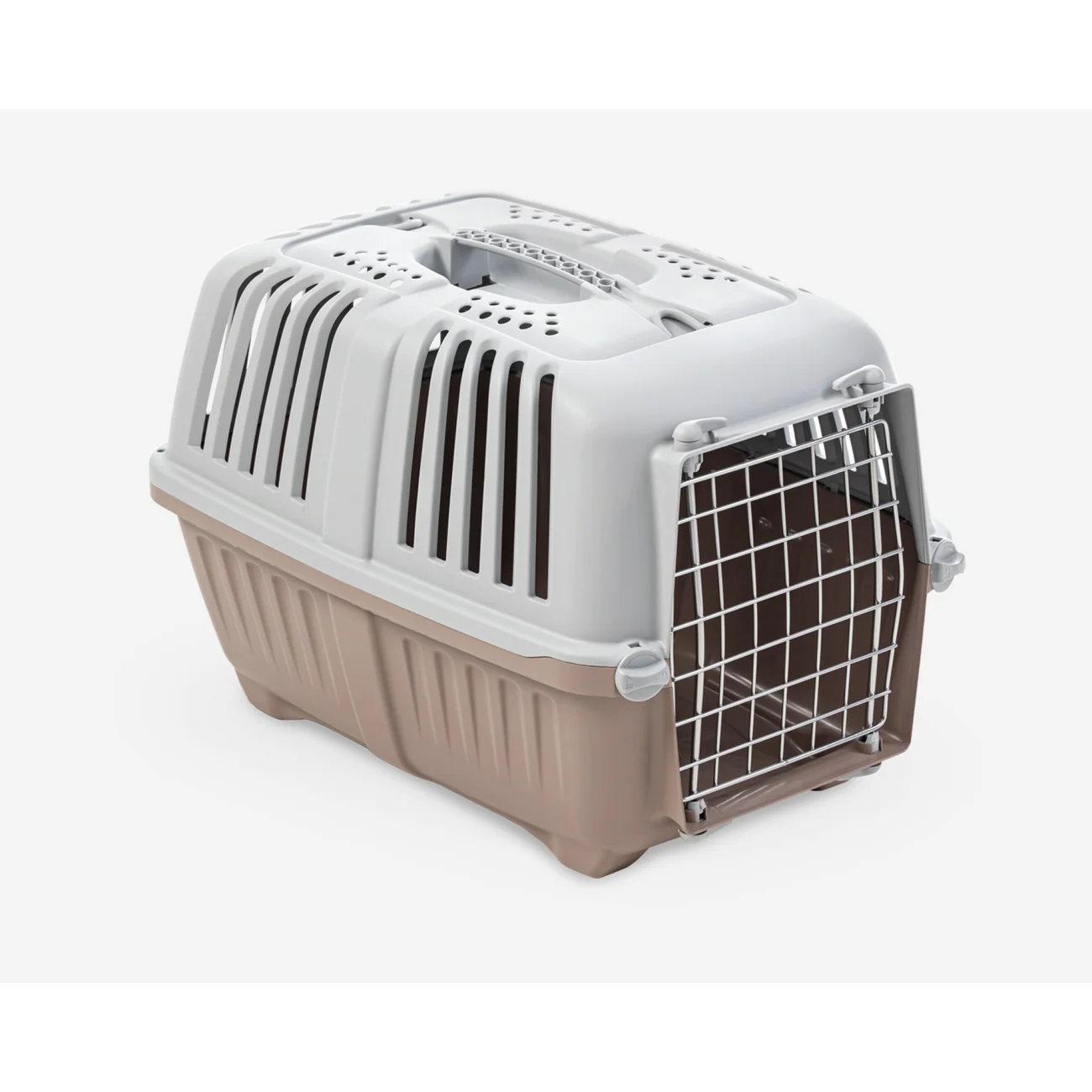
- The Pet Carrier Medium Size Light Pink measures 55 x 36 x 36 cm and costs AED 114.00.
- Cover the carrier with a light towel in the car to block visual stress.
- Use one carrier per cat in multi-cat households and let the returning cat settle for 10-15 minutes.
Table of Contents
- Why a Secure Cat Carrier Is Non-Negotiable for Grooming Day
- How to Carrier Train a Cat Before the Appointment
- Picking the Best Cat Carrier for Anxious Cats
- How to Calm a Cat Before Grooming
- What to Bring to a Cat Grooming Appointment
- Carrier Hygiene, Senior Cats, and Multi-Cat Households
- Booking Your Grooming Session at Paw Atelier
- Frequently Asked Questions
Why a Secure Cat Carrier Is Non-Negotiable for Grooming Day
A secure cat carrier is the single most important piece of equipment for a grooming appointment. It keeps your cat safe in transit, protects groomers from scratches, and reduces stress on every trip.
A loose cat in a car is a real danger. Cats can slip under pedals, bolt through an open door, or injure themselves trying to escape. A carrier removes that risk entirely.
Grooming salons also have rules. Secure containment protects your pet, our team, and the other animals in the salon. The Fear Free Pets guidance on low-stress handling explains why carriers matter for feline welfare during vet and grooming visits.
Safety and salon requirements
Salons ask for three things: a hard-sided or structured carrier, a cat that stays inside it until the groomer is ready, and a carrier that opens from the top or front. Top-loading carriers let groomers lift a cat out gently instead of dragging it through a small door. That single feature changes the whole experience for a nervous cat.
How to Carrier Train a Cat Before the Appointment
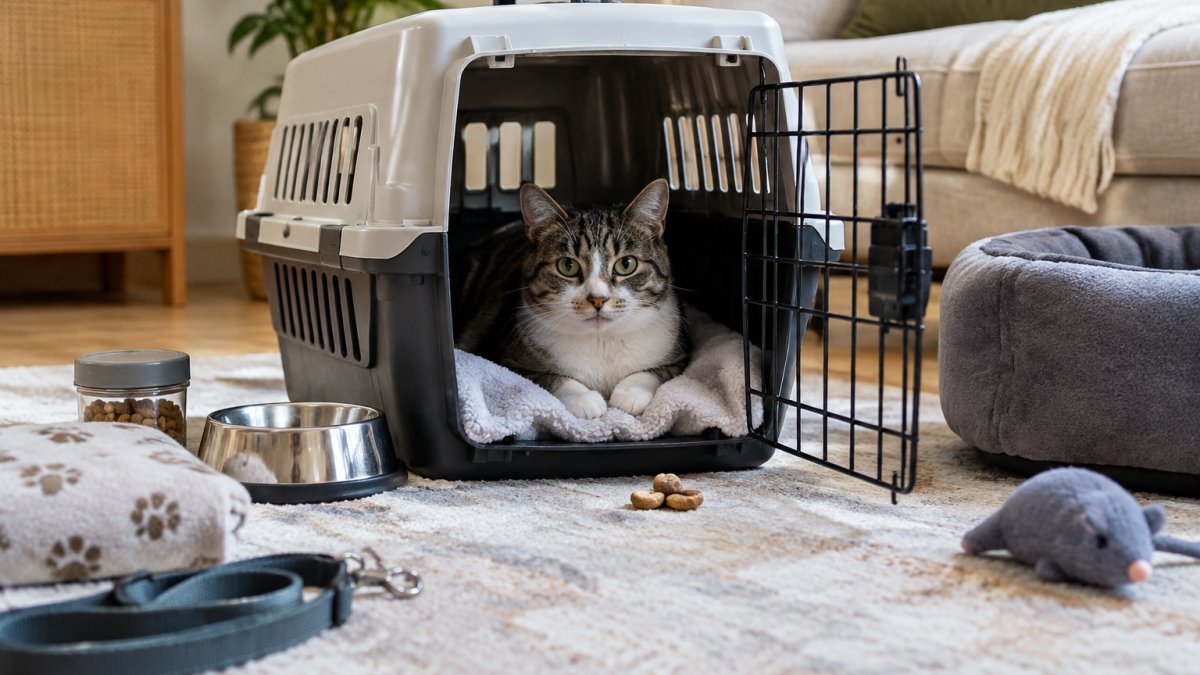
Carrier training means teaching your cat that the carrier is a normal, safe part of home life. Start at least a week before the appointment, using repetition and positive reinforcement, not force.
Most owners make one mistake: they only bring the carrier out on grooming day, and your cat quickly learns it means something scary is coming.
A seven-day acclimation plan
Here is the step-by-step plan we recommend to owners:
- Day 1: Leave the carrier open in a quiet room with a blanket inside. Let your cat explore on its own.
- Day 2: Place treats and a favourite toy just inside the entrance. Do not close the door.
- Day 3: Feed one meal beside the carrier. Keep the mood calm.
- Day 4: Feed inside the carrier with the door open. Praise your cat softly.
- Day 5: Close the door for a few seconds while your cat eats, then open it.
- Day 6: Close the door for a minute, then two. Stay in the room.
- Day 7: Lift the carrier a few centimetres and set it down. Reward with a treat.
If your cat panics, go back one day and move slower.
Here is the seven-day acclimation plan we recommend to owners.
| Day | What to do |
|---|---|
| Day 1 | Leave carrier open in a quiet room with a blanket inside |
| Day 2 | Place treats and a favourite toy just inside the entrance |
| Day 3 | Feed one meal beside the carrier |
| Day 4 | Feed inside the carrier with the door open |
| Day 5 | Close the door for a few seconds while your cat eats |
| Day 6 | Close the door for a minute, then two |
| Day 7 | Lift the carrier a few centimetres and set it down |
Picking the Best Cat Carrier for Anxious Cats
The best cat carrier for anxious cats is a hard-sided, top-loading model that is escape-proof, easy to clean, and sized so your cat can stand and turn around. Too big feels unsafe; too small causes stress.
Features that reduce stress and escape risk
Look for these features when you shop:
- Top-loading door for gentle lifting
- Secure sliding or locking hooks, not flimsy side clips
- Solid walls that block scary sights
- Good ventilation on at least two sides
- Easy-clean base for accidents
Our Pet Carrier Medium Size Light Pink is a good example. It measures 55 x 36 x 36 cm, uses an internationally patented sliding hook instead of side hooks, and costs AED 114.00. For a smaller or more nervous cat, the Pet Carrier Flower Plum Small offers a tighter, cosier option.
Avoid soft-sided carriers for anxious cats. They wobble, collapse slightly, and give a determined cat a way to claw out.
How to Calm a Cat Before Grooming
Calming a cat before grooming starts the night before, not in the car.
Try these steps:
- Keep the morning quiet. No loud music, no visitors.
- Skip a heavy meal right before the trip.
- **
- Cover the carrier with a light towel in the car to block visual stress.
- Drive smoothly and keep the car cool.
- Speak softly. Cats pick up on your tension.
Never use sedation without veterinary guidance. Only a vet can advise on calming aids or medication for your cat.
What to Bring to a Cat Grooming Appointment
Packing for a grooming appointment is not just about the carrier. A few well-chosen items make the trip smoother and help your cat recover afterwards.
The essentials
- The carrier, with a familiar blanket inside that smells of home.
- A spare towel for the journey home, since groomers often return a cat slightly damp.
- Your cat's vaccination record, if your groomer asks; many salons require proof of current vaccinations. Keep a digital copy on your phone as backup.
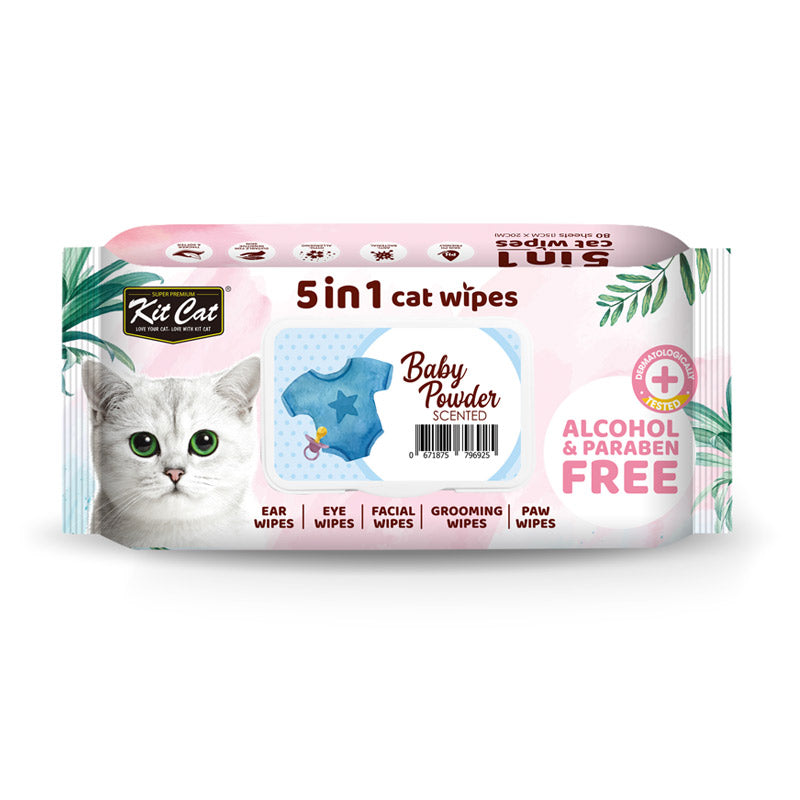
- Cat-safe wipes for quick cleanups. Our Kit Cat 5 In 1 Cat Wipes Baby Powder Scented are handy before or after grooming. Keep them in your bag, not in the carrier.
- A treat for a calm reward after the session, something your cat does not get every day.
What to leave at home
Leave the harness and lead at home; a harness slows the groomer down and adds stress. Also leave toys that could be swallowed or tangled in grooming equipment, and do not bring other pets, which distract the groomer and add to the cat's stress.
Climate and comfort items for warmer months
In hotter weather, a carrier can become uncomfortably warm in a parked car. Bring a small, freezer-safe gel pack wrapped in a towel and place it under the carrier's base, never directly against the cat. Avoid leaving the carrier in direct sunlight, even briefly; a light-coloured carrier reflects heat better than a dark one.
Post-grooming care items
After the appointment, your cat may be tired, slightly damp, or irritable. Bring a small zip-top bag with a few treats and a clean, dry towel. If the groomer uses a specific shampoo or finishing spray, ask for the product name to note for next time. For long fur, a fine-toothed comb lets you smooth ruffled patches before the ride home.
Watch out: do not pack food or treats loosely in the carrier. A cat may gulp them too quickly and choke, or the food may spoil in the heat. Keep treats in a separate sealed bag.
Carrier Hygiene, Senior Cats, and Multi-Cat Households
Carrier hygiene, senior cat comfort, and multi-cat household dynamics are three areas where a little extra planning prevents big problems.
Cleaning and sanitising your carrier between appointments
After every grooming appointment, empty the carrier completely and remove the blanket and toys. Wipe the interior with a pet-safe disinfectant labelled for use around cats, without bleach or strong phenols, paying attention to corners and the base where urine or saliva collects. Rinse with a damp cloth and let the carrier air dry fully before storing; trapped moisture encourages mould and mildew.
Watch out: never use household bleach or ammonia-based cleaners inside a carrier.
Carrier features for senior or mobility-impaired cats
Older cats often have arthritis, muscle weakness, or reduced vision. A standard top-loading carrier can be hard for them to enter and exit, and a high lip forces stiff joints to step up.
If your cat is blind or has poor vision, choose solid walls rather than mesh, which can be disorienting. Keep the carrier stable in the car, on the floor behind the passenger seat or secured with a seatbelt, so it does not slide or tip.
Managing multi-cat households around grooming appointments
In a multi-cat household, one cat returning from grooming can trigger territorial aggression. The returning cat smells of shampoo, other animals, and the salon, and the resident cats may hiss, swat, or isolate it. This is normal, but you can reduce it.
Use one carrier per cat.
When you bring a cat home from grooming, do not release it immediately into the group. Place the carrier in a quiet room and let the cat settle for 10-15 minutes. Alternatively, keep the returning cat in a separate room for an hour with food and water, then allow supervised reintroduction.
Emergency backup for carrier failure
A broken latch or cracked door is rare but possible, so keep a spare carrier folded and stored at home. If a latch fails while travelling, do not open the car door: pull over safely, wrap your cat in a thick towel, and place it in the backup carrier before continuing. If you are already at the salon, ask the groomer for a secure holding cage while you fetch the spare. Never carry a frightened cat in your arms in a busy car park or salon reception.
Booking Your Grooming Session at Paw Atelier
At Paw Atelier, you can book your grooming session directly through WhatsApp.
If this is your pet's first visit, read our guide on what to expect at a first grooming appointment so you and your pet arrive prepared. You can also compare local options in our roundup of the best premium pet shops for grooming and food before you decide.
A stressed cat on grooming day is not a given. With the right carrier, a week of patient training, and a calm morning routine, the trip becomes routine.
Frequently Asked Questions
Should I bring my cat to a grooming appointment in a carrier?
Yes. A secure cat carrier keeps your cat contained during transport and protects them from slipping out of your arms in a waiting area. It also gives the groomer a safe way to move your cat between the salon and the grooming table. Cats that arrive loose or in a soft bag are at higher risk of escape and injury. Choose a hard-sided or top-loading carrier that is escape-proof, and line it with a familiar blanket so your cat has something that smells like home.
How do I get my cat into a carrier without stress?
Start carrier training days before the appointment. Use positive reinforcement: reward any sniff or step inside. On grooming day, place the carrier on a stable surface and guide your cat in rear-first or use the top-loading door. Never chase or force your cat in, as this builds lasting fear.
What type of cat carrier is easiest for a grooming appointment?
A hard-sided carrier with a top-loading door is usually easiest. Look for a carrier with a secure sliding hook or locking mechanism, good ventilation, and a size that lets your cat stand and turn around. Soft-sided carriers work for calm cats but offer less protection in a busy salon.
Can I leave my cat's carrier with the groomer?
Leaving the carrier gives your cat a familiar, secure space to settle in between handling. Label the carrier with your name and phone number in case it is moved.
