

Last Updated: November 14, 2026
Quick Summary
Choose organic pet food because it is made from ingredients grown under certified organic farming rules, with restrictions on synthetic pesticides, artificial additives and preservatives. The label signals farming standards and restricted chemical residues, not nutritional adequacy, so always check the nutritional adequacy statement and certification mark before buying.
- The global organic pet food market was estimated at USD 2,779.2 million in 2025.
- Organic farming restricts synthetic pesticide use and sets animal welfare and environmental standards.
- Natural is a marketing term with no fixed farming standard behind it.
- Read labels in order: adequacy statement, ingredient panel, guaranteed analysis, certification mark.
- A credible organic claim is backed by a certifier's name or logo, not just the word on the front.
Table of Contents
- Why Choose Organic Pet Food: What the Label Really Tells You
- Organic vs Conventional Pet Food: What Actually Changes
- How to Read Pet Food Labels Before You Buy
- Frequently Asked Questions
Why Choose Organic Pet Food: What the Label Really Tells You
Organic pet food is produced from ingredients grown under certified organic farming rules, with restrictions on synthetic pesticides, artificial additives and preservatives. The global organic pet food market was estimated at USD 2,779.2 million in 2025 and is forecast to reach USD 5,951.9 million by 2034 (IMARC Group organic and natural pet food market forecast). The question pet owners ask most is whether the label actually proves it.
The label signals farming standards and restricted chemical residues, not nutritional adequacy, a certified organic bag and a conventional bag can both meet complete and balanced nutrition, or both fall short.
If your pet has skin sensitivities alongside ingredient concerns, browse premium food options for sensitive skin before committing to a full bag.
Organic vs Conventional Pet Food: What Actually Changes
The difference comes down to how ingredients are produced, not to guaranteed health outcomes: organic farming restricts synthetic pesticide use and sets animal welfare and environmental standards, while conventional food uses ingredients grown under standard agricultural rules. For help choosing a premium diet for your dog, see The Pet Owner's Guide to Choosing Premium Dog Food. A review of the factors that drive pet food choices identified product quality, ingredient composition, price, brand reputation, sustainability and the pet's own health status as recurring influences (systematic literature review on what drives pet food choices).
| Factor | Organic | Natural | Conventional |
|---|---|---|---|
| Farming rules | Certified organic standards | No certification required | Standard agriculture |
| Synthetic pesticides | Restricted | Not defined by the term | Permitted within limits |
| Price premium | Highest | Middle | Lowest |
The "natural" column deserves attention: a veterinary source cautions that labels such as "all-natural" or "grain-free" may sound appealing but do not necessarily equate to better nutrition (veterinary guidance on choosing pet diets over marketing). Natural is a marketing term with no fixed farming standard behind it.
Ready to act on the comparison? Browse our dog food range to see what is currently in stock.
How to Read Pet Food Labels Before You Buy
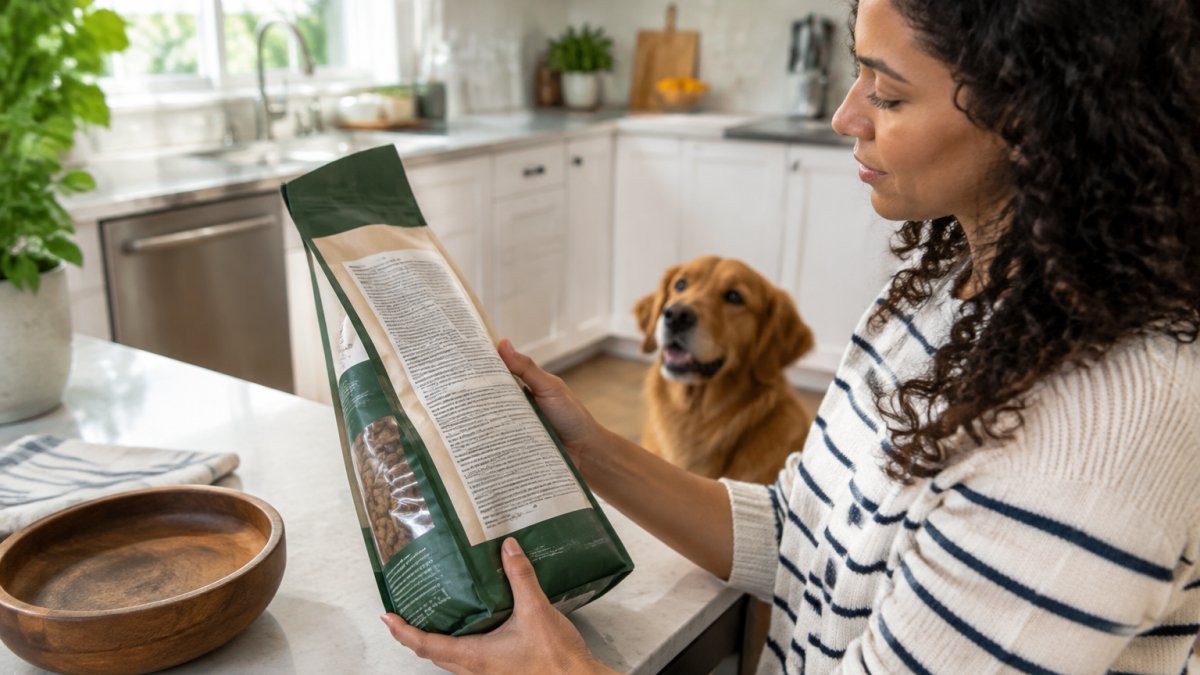
Reading a pet food label means checking four things in order: the nutritional adequacy statement, the ingredient panel, the guaranteed analysis, and the certification mark.
Start with the adequacy statement: "complete and balanced" plus a life stage confirms recognised nutrient profiles; without it, the food is a treat or mixer. Then the ingredient panel, ingredients are listed by weight before processing, so compare panels across products rather than reading one in isolation. Check the guaranteed analysis for protein, fat, fiber and moisture, and last, the certification mark: a credible organic claim is backed by a certifier's name or logo, not just the word on the front.
Shopping for a cat? See wet food picks compared side by side to apply these label checks to real products, or go straight to dry cat food.
Choosing well means separating the farming claim from the nutrition claim, and that takes a closer look than most bags invite. Paw Atelier sits in Al Hamidiya, Ajman, with a curated selection of premium pet food, treats, toys and accessories, plus grooming appointments you can book directly over WhatsApp. Bring us your pet's label questions and we will help you compare recipes against your pet's life stage and sensitivities. Get started with Paw Atelier and feed with confidence.
Frequently Asked Questions
What are the benefits of organic pet food?
The main appeal is what goes into the bag. Organic ingredients are grown under farming standards that restrict synthetic pesticides and artificial additives, so you reduce your pet's exposure to chemical residues. Organic food is not automatically more nutritious, though. Check that the bag states complete and balanced nutrition for your pet's life stage before assuming it is the better option.
Is organic pet food worth the extra cost?
It depends on your priorities. Organic pet food carries a price premium because certified ingredients cost more to produce, If your goal is reducing exposure to synthetic pesticides and additives, the extra cost may be justified. If your pet has a specific medical need, a veterinary-prescribed diet matters more than an organic label. Compare ingredients on the panel before paying more.
Can I switch my pet to organic food suddenly?
Switch gradually over seven to ten days rather than all at once. Start with about a quarter of the new organic food mixed into the old, then increase the proportion every few days until the bowl is fully organic. Sudden changes can cause loose stools or vomiting, especially in pets with sensitive digestion. Watch for scratching, ear redness or coat changes during the transition, since food sensitivities sometimes show up after a diet change. If symptoms persist beyond a few days, speak to your vet before continuing.
